Inflation in the Eurozone July 2026: 2.9%
Lifestyle Habits
4 augustus 2026
Reading time: 5 minutes
Groceries becoming more expensive, rising energy bills, filling up the tank costing more. Inflation in the Eurozone reached 2.9% in July 2026, an increase compared to 2.8% in June. Energy, in particular, became significantly more expensive.
In this blog, you will read exactly what is going on, why energy is the biggest culprit, and what practical steps you can take to keep a grip on your budget.
What is the inflation in the Eurozone in July 2026?
Inflation in the Eurozone was expected to be 2.9% in July 2026. That is a slight increase compared to June, when the percentage stood at 2.8%.
Inflation measures how much more expensive an average basket of products and services becomes within a year. The higher this figure, the faster your money loses value.
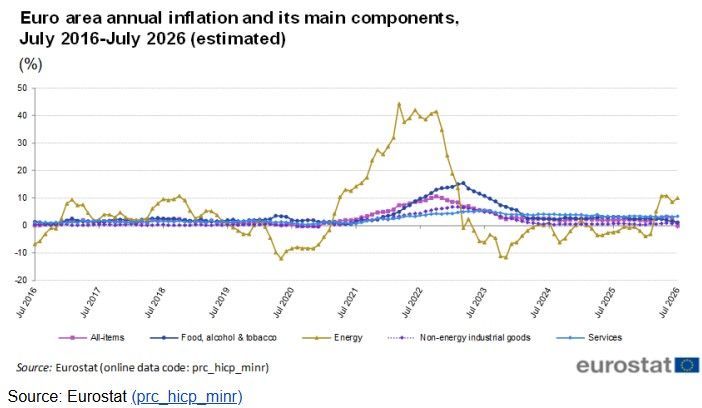
Four major categories together determine this percentage: energy, services, food (including alcohol and tobacco), and industrial goods excluding energy. Each category moves in its own way, which makes the difference between "inflation is falling" and "my energy bill is actually rising" very easy to explain.
Energy is the big outlier
Energy jumped to an annual increase of 10.0% in July, compared to 8.5% in June. That is by far the strongest increase of all categories. Do you feel that your energy bill weighs disproportionately heavily on your budget? Then that feeling is completely aligned with the figures.
Practical tip: take another close look at your energy contract. Compare fixed and variable rates and check if switching pays off. Small savings on energy add up more than you think with a 10% increase.
Services continue to rise steadily
Services such as hospitality, hairdressers, insurance, and subscriptions rose by 3.3% in July, slightly more than the 3.2% in June. This category carries the most weight in the total inflation figure: nearly half of your average expenses (46.8%) go to services.
Practical tip: review your fixed subscriptions once a quarter. Streaming, insurance, gym membership: there is often room to cut back or negotiate without missing out on anything.
What is happening with food prices?
Food, alcohol, and tobacco rose by 1.2% in July, a decrease compared to 1.5% in June. Non-energy industrial goods, such as clothing and electronics, also rose slightly by 0.9%.
Three steps to start smart money management today
- Map out your fixed costs. Energy, insurance, and subscriptions: know exactly what goes out of your account every month.
- Set a realistic savings goal. Even a small amount per month builds up a buffer against rising prices.
- Review your budget every quarter. Inflation figures change, and your budget is allowed to move along with them.
Do you want to get serious about this? Our 'Practical Money Tips' course helps you gain more control over your money step by step.
Frequently Asked Questions about inflation
What is the inflation rate in the Eurozone in July 2026?
Inflation in the Eurozone is expected to be 2.9% in July 2026, compared to 2.8% in June.
Which category is rising the fastest?
Energy rose the fastest by 10.0% year-on-year, a significant jump compared to 8.5% in June.
Is food becoming more expensive or cheaper?
Food, alcohol, and tobacco rose less sharply than before: 1.2% in July compared to 1.5% in June.
How often is this figure updated?
Eurostat publishes these figures monthly.
What can I do myself to combat inflation?
Map out your fixed expenses, compare energy contracts, and build a financial buffer. Small, structural adjustments make a big difference in the long run.
Author: written by LifestyleHabits.nl, specializing in practical and accessible money management, healthy eating habits, and personal development.